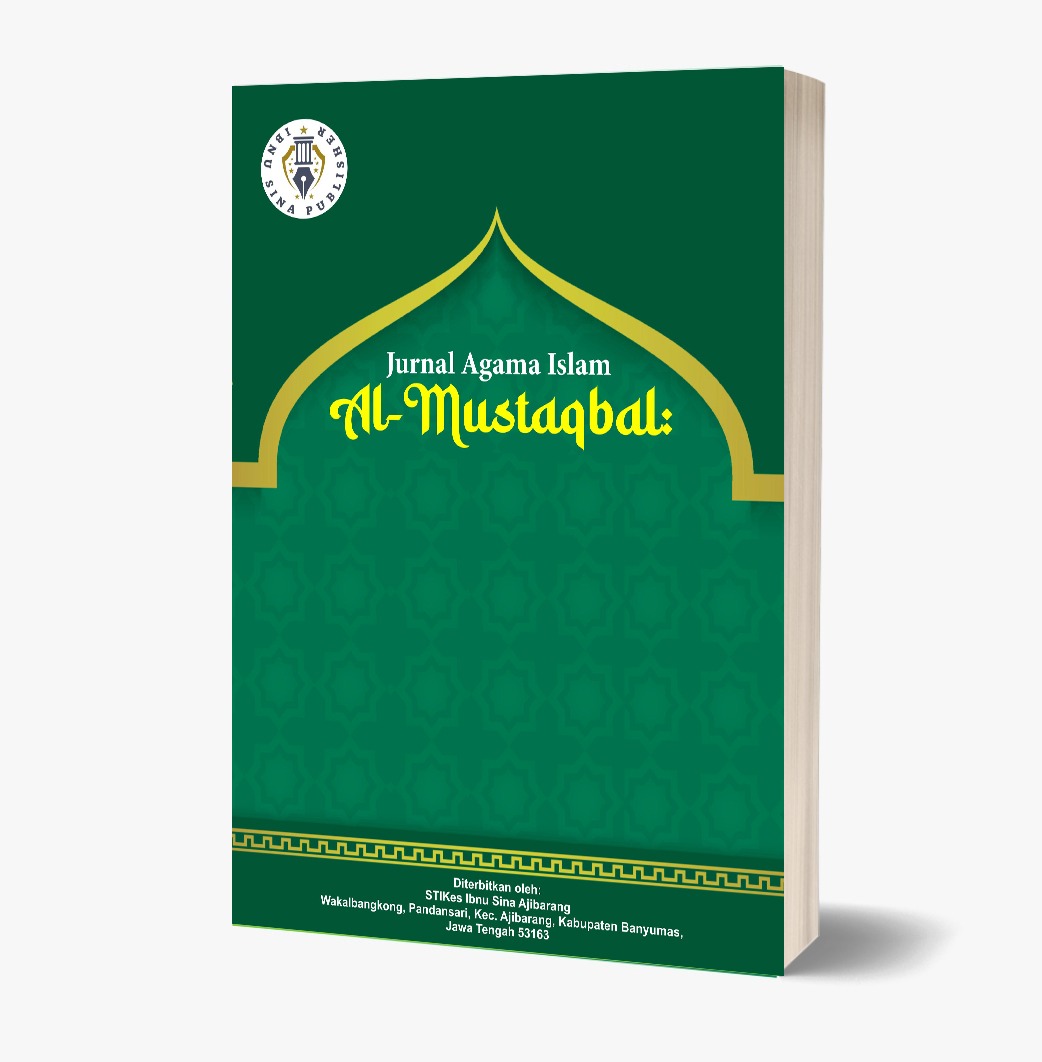
Ukhuwah and Mutual Assistance as Social and Spiritual Capital For Preventing Radicalism and Terrorism: A Systematic Literature Review From The Perspective of Islamic Psychology
DOI:
https://doi.org/10.59841/al-mustaqbal.v3i3.606Keywords:
Radicalization; Ukhuwah Islamiyah; Gotong Royong; Islamic Psychology; Deradicalization; Indonesia.Abstract
Radicalization and terrorism remain persistent threats to social cohesion in Indonesia, the world's largest Muslim-majority nation, notwithstanding recent improvements reflected in the 2025 Global Terrorism Index. Community-based and faith-based prevention strategies have attracted growing scholarly attention as complements to hard security approaches. This study employs a systematic literature review, guided by the PRISMA 2020 protocol, to examine how ukhuwah Islamiyah (Islamic brotherhood) and gotong royong (mutual cooperation) function as social-spiritual capital capable of preventing radicalization, viewed through the lens of Islamic psychology. Forty sources published between 1954 and 2025 were analyzed thematically. Findings indicate that both constructs interrupt the earliest steps of Moghaddam's staircase model by reducing perceived injustice, strengthening multiple identity, and satisfying the conditions of intergroup contact associated with prejudice reduction. Islamic psychology reframes these cultural values as expressions of tawhid, ukhuwah, and communal spiritual wellbeing rather than mere sociological custom. The review concludes that integrating ukhuwah Islamiyah and gotong royong into community-based deradicalization programs offers a culturally grounded and theologically legitimate preventive framework for Indonesia and comparable Muslim-majority societies.
References
Abu-Raiya, H., & Pargament, K. I. (2011). Empirically based psychology of Islam: Summary and critique of the literature. Mental Health, Religion & Culture, 14(2), 93–115. https://doi.org/10.1080/13674670903426482
Allport, G. W. (1954). The Nature of Prejudice. Addison-Wesley.
ANTARA News. (2025). Indonesia improves ranking in 2025 Global Terrorism Index—ANTARA News. https://en.antaranews.com/news/351277/indonesia-improves-ranking-in-2025-global-terrorism-index
Aslan, A. (2017). NILAI-NILAI KEARIFAN LOKAL DALAM BUDAYA PANTANG LARANG SUKU MELAYU SAMBAS. Jurnal Ilmu Ushuluddin, 16(1), 11. https://doi.org/10.18592/jiiu.v16i1.1438
Badan Nasional Penanggulangan Terorisme. (2020). Peraturan Badan Nasional Penanggulangan Terorisme Nomor 1 Tahun 2020 tentang Rencana Strategis Badan Nasional Penanggulangan Terorisme Tahun 2020–2024.
Billig, M., & Tajfel, H. (1973). Social categorization and similarity in intergroup behaviour. European Journal of Social Psychology, 3(1), 27–52. https://doi.org/10.1002/ejsp.2420030103
Christie, D. J., Tint, B. S., Wagner, R. V., & Winter, D. D. (2008). Peace psychology for a peaceful world. American Psychologist, 63(6), 540–552. https://doi.org/10.1037/0003-066X.63.6.540
Dewantara, A. W. (2016). “Gotong-Royong” als Indonesische Filosofie in Max Scheler Perspectief. 4(1), 1–14.
Faturochman. (2008). Model-model psikologi kebhinnekatunggalikaan dan penerapannya di Indonesia. Fakultas Psikologi UGM.
Fusnika, F., & Tyas, D. K. (2018). NILAI PEMBENTUK KARAKTER KEBANGSAAN PADA BUDAYA LOKAL KEE’RJA BANYAU. Jurnal Ilmiah Pendidikan Pancasila dan Kewarganegaraan, 3(2), 126. https://doi.org/10.17977/um019v3i2p126-131
Haque, A., Khan, F., Keshavarzi, H., & Rothman, A. E. (2016). 20201218. Journal of Muslim Mental Health, 10(1). https://doi.org/10.3998/jmmh.10381607.0010.107
Horgan, J. (2008). From Profiles to Pathways and Roots to Routes: Perspectives from Psychology on Radicalization into Terrorism. The ANNALS of the American Academy of Political and Social Science, 618(1), 80–94. https://doi.org/10.1177/0002716208317539
Institute for Economics & Peace. (2025). Global Terrorism Index 2025.
Kementerian Sekretariat Negara Republik Indonesia. (2021). Peraturan Presiden Nomor 7 Tahun 2021 tentang Rencana Aksi Nasional Pencegahan dan Penanggulangan Ekstremisme Berbasis Kekerasan yang Mengarah pada Terorisme Tahun 2020–2024.
Kementerian Sekretariat Negara Republik Indonesia. (2023). Peraturan Presiden Nomor 58 Tahun 2023 tentang Penguatan Moderasi Beragama.
Kruglanski, A. W., Gelfand, M. J., Bélanger, J. J., Sheveland, A., Hetiarachchi, M., & Gunaratna, R. (2019). The Psychology of Radicalization and Deradicalization: How Significance Quest Impacts Violent Extremism. Political Psychology, 35(S1), 69–93. https://doi.org/10.1111/pops.12163
Lygre, R. B., Eid, J., Larsson, G., & Ranstorp, M. (2011). Terrorism as a process: A critical review of Moghaddam’s “Staircase to Terrorism.” Scandinavian Journal of Psychology, 52(6), 609–616. https://doi.org/10.1111/j.1467-9450.2011.00918.x
McCauley, C., & Moskalenko, S. (2008). Mechanisms of Political Radicalization: Pathways Toward Terrorism. Terrorism and Political Violence, 20(3), 415–433. https://doi.org/10.1080/09546550802073367
Moghaddam, F. M. (2005). The Staircase to Terrorism: A Psychological Exploration. American Psychologist, 60(2), 161–169. https://doi.org/10.1037/0003-066X.60.2.161
Page, M. J., McKenzie, J. E., Bossuyt, P. M., Boutron, I., Hoffmann, T. C., Mulrow, C. D., Shamseer, L., Tetzlaff, J. M., Akl, E. A., Brennan, S. E., Chou, R., Glanville, J., Grimshaw, J. M., Hróbjartsson, A., Lalu, M. M., Li, T., Loder, E. W., Mayo-Wilson, E., McDonald, S., … Moher, D. (2021). The PRISMA 2020 statement: An updated guideline for reporting systematic reviews. BMJ, n71. https://doi.org/10.1136/bmj.n71
Pettigrew, T. F., & Tropp, L. R. (2006). A meta-analytic test of intergroup contact theory. Journal of Personality and Social Psychology, 90(5), 751–783. https://doi.org/10.1037/0022-3514.90.5.751
Pettigrew, T. F., & Tropp, L. R. (2008). How does intergroup contact reduce prejudice? Meta‐analytic tests of three mediators. European Journal of Social Psychology, 38(6), 922–934. https://doi.org/10.1002/ejsp.504
Pettigrew, T. F., Tropp, L. R., Wagner, U., & Christ, O. (2011). Recent advances in intergroup contact theory. International Journal of Intercultural Relations, 35(3), 271–280. https://doi.org/10.1016/j.ijintrel.2011.03.001
Putnam, R. D. (2000). Bowling alone: The collapse and revival of American community. Simon & Schuster.
Rothman, A. (2021). Developing a Model of Islamic Psychology and Psychotherapy: Islamic Theology and Contemporary Understandings of Psychology (1st ed.). Routledge. https://doi.org/10.4324/9781003104377
Rothman, A., & Coyle, A. (2018). Toward a Framework for Islamic Psychology and Psychotherapy: An Islamic Model of the Soul. Journal of Religion and Health, 57(5), 1731–1744. https://doi.org/10.1007/s10943-018-0651-x
Shohib, M., Al Masithoh, S., & Al-Ghifari, F. H. (2024). Ukhuwah Islamiyah dan interaksi harmonis antarumat beragama di Indonesia: Kajian tafsir ayat-ayat ukhuwah dalam Al-Qur’an. Al Furqan: Jurnal Ilmu Al Quran Dan Tafsir, 7(2), 493–512.
Sihombing, A. A. (2018). Mengenal Budaya Batak Toba Melalui Falsafah “Dalihan Na Tolu” (Perspektif Kohesi dan Kerukunan). Jurnal Lektur Keagamaan, 16(2), 347–371. https://doi.org/10.31291/jlk.v16i2.553
Silondae, D. P. (2013). MODEL BIMBINGAN KELOMPOK BERBASIS NILAI BUDAYA SUKU TOLAKI UNTUK MENINGKATKAN KETERAMPILAN SOSIAL SISWA.
Simarmata, N., Yuniarti, K. W., Riyono, B., & Patria, B. (2020). Gotong Royong in Indonesian History. Digital Press Social Sciences and Humanities, 5, 00006. https://doi.org/10.29037/digitalpress.45341
Suriati, Burhanuddin, & Nur, M. J. (2020). Da’wah in Form of Ukhuwah Islamiyah. Proceedings of the 1st Borobudur International Symposium on Humanities, Economics and Social Sciences (BIS-HESS 2019). 1st Borobudur International Symposium on Humanities, Economics and Social Sciences (BIS-HESS 2019). https://doi.org/10.2991/assehr.k.200529.198
Suwignyo, A. (2019). Gotong royong as social citizenship in Indonesia, 1940s to 1990s. Journal of Southeast Asian Studies, 50(3), 387–408. https://doi.org/10.1017/S0022463419000407
Tarimana, A. (1993). KebudayaanTolaki. Balai Pustaka.
Widodo, A. (2020). Nilai Budaya Ritual Perang Topat Sebagai Sumber Pembelajaran IPS Berbasis Kearifan Lokal di Sekolah Dasar. Gulawentah:Jurnal Studi Sosial, 5(1), 1. https://doi.org/10.25273/gulawentah.v5i1.6359